How Hong Kong’s Forgotten Trades helped me remember who I am
words Lindsay Varty
The school bell rings out and a thousand uniform-clad teenagers spill out into the crisp Hong Kong winter air. We snake down narrow alleyways and side streets to find the elusive roasted chestnut man to get our after-school fix. You smell his stall before you even see him; the smoky, earthy aroma of my childhood fills the air - chestnuts roasted on hot coals in a giant black iron wok over an open fire. Our version of a Christmas tale.
"Yut bao chao lut tzi, mm goi!"
("One bag of roasted chestnuts please!")
We clutch the warm bulging paper bags against our cardigans as we stroll giddily through the open air stalls of Mong Kok's Ladies' market, expertly cracking open the shells with our teeth and popping the soft interior into our mouths. We pass flower markets, traditional rice wholesalers and elderly men behind equally ancient countertops, delicately measuring out dried caterpillar fungus on handmade wooden steelyard scales.
But I'm going to make a slight alteration to the image you probably have in your head: I'm white. Well, at least I look it.
Growing up as a caucasian or "gweilo" (meaning 'foreign devil') navigating these deeply local spaces in Hong Kong, meant my presence was almost always met with curious stares. Some glances carried a quiet respect - particularly after hearing me speak some cantonese- while others were heavy with suspicion. I spent a lot of time trying to prove myself as 'one of the good ones.' It wasn't uncommon for local people to clap and give me an approving thumbs up after seeing me eat a stick of curried fish balls, which would actually make me feel more self conscious than anything - I liken it to applauding a Chinese man in London casually eating a sandwich.
I'm a Third Culture Kid (TCK): raised in Hong Kong for my whole life, I speak Cantonese (albeit with an accent) and enjoy local cuisine and culture. Yet I am forever marked as a "ngoi gwok yun' or 'outsider' due to my brown hair and light skin. For a long time, this confused me: if not here, then where is my home? Where am I from?
For clarity- my mother is ethnically Macanese, from the island of Macau just off of Hong Kong, but her family have lived in Hong Kong for over four generations. My father is originally British, but has lived in Hong Kong since he was six. Before that, he lived in Jamaica too. I have a British and a Hong Kong passport but have only ever lived in Hong Kong.
As the years ticked by, the cityscape around me began to shift with terrifying speed. The gritty, vibrant markets of my childhood no longer sold locally crafted bags and freshly squeezed sugar cane juice, but were instead replaced by shiny shopping malls full of global brands like Topshop, Sephora and Zara. Hawker stall licenses dried up, left to expire with their ageing owners. Modern technology and automation began wiping out a millennia of industry, custom, and tradition. In their place, progress offered a new face; young, fresh, and unwrinkled, but one that looked exactly the same as everyone else.
In our relentless pursuit of progression, had we washed out individuality, tradition and cultural identity?
One winter afternoon, I walked through Mong Kok looking for a familiar comfort but the chestnut man was long gone. Rice was now bought in supermarkets in large plastic bags, the neon signs Hong Kong had once been famous for were replaced by cheap LED equivalents, and nobody looked for the cobbler anymore- they just bought new shoes.
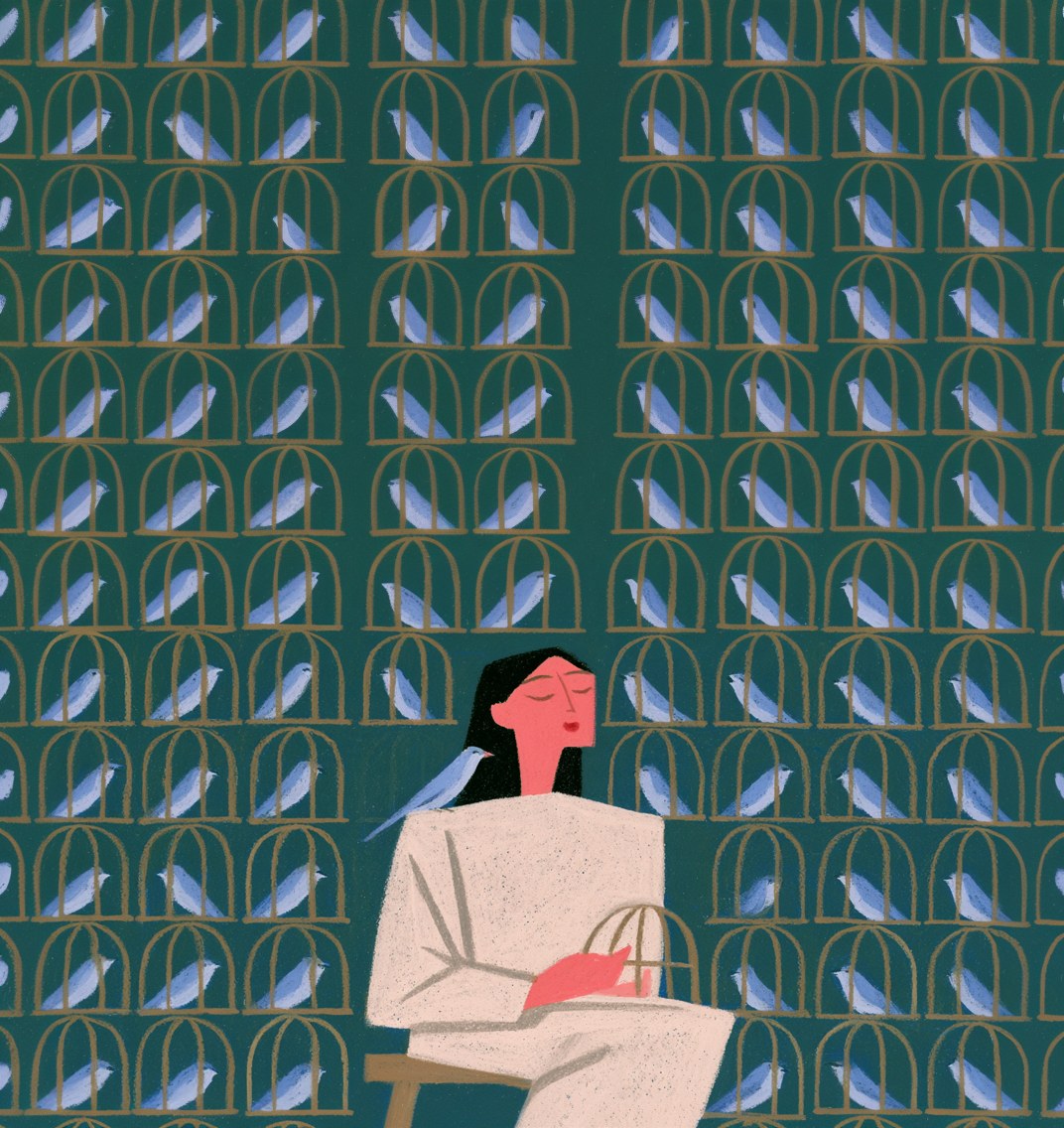
Their collective losses sparked something inside me. I decided to do a very un-Hong Kong thing: I started talking to strangers. In a city where people usually keep their heads down, this approach was unusual, but being a Hongkonger who didn't look like a Hongkonger actually worked to my advantage; people were more accepting of my curiosity and entertained my questions. They told me stories of their trades, their family histories and reasons they continued in their largely redundant jobs. It took me three years to document the remaining "Sunset Survivors" of Hong Kong for my book, but the stories of bird cage makers, face threaders, paper-effigy makers, fortune tellers and more will stay with me forever.
Their trades have been lovingly passed down through generations, upholding the tales, traditions, and physical relics of Hong Kong history. To me, their presence and their stories were vital parts of local culture that we desperately needed to preserve in some way. Human beings have a tragic habit of waiting until something is dead and gone before we pay any attention to it - I didn't want to wait for these sunset industries to disappear completely before people paid them any attention.
I wrote my book, Sunset Survivors, because I wanted to put a spotlight on these local artisans right now, before they disappear forever. Despite the overwhelming tide of modern technology, shifting societal beliefs, a dwindling customer base, and a severe lack of willing successors, these individuals persisted. They pursued their families’ traditional businesses out of pure devotion and dedication to their craft and I thought that was far more respectable than a new global franchise opening in town.
Take Mrs. Ho, an octogenarian master of handheld traditional wooden beam scales with a tight perm and fingers crooked with arthritis. Everyday, she sits listening to Chinese opera music on an old radio outside her tiny shop selling her scales to market workers and local fishermen - the few that haven't replaced them with digital scales that is. She has seven children, thirteen grandchildren and two great grandchildren - none of whom are willing to take over the business and all urge her to retire and relax. But she swears she will work until the day she dies to honour her father’s wish that someone continue his shop and legacy.
Then there is Master Leung Lo Yik, one of Hong Kong's very last letter writers; once a highly regarded profession for the educated few that helped illiterate Hong Kongers write letters to family in China or fill in work contracts or welfare applications. All of which was, and still is, written on a typewriter. Their assistance became progressively unnecessary after the introduction of compulsory education in the 1970s and modern day computers and smartphones. Master Leung is originally from Vietnam but set up a new life in Hong Kong in the mid 70s. After initially working as a bartender, where he quickly picked up Cantonese and Mandarin (to accompany his fluent Vietnamese, English and French), he used his background as an accounts secretary for Columbia Pictures to set up work as a letter writer. He has written contracts for Cantonese Opera performers, translated documents for local celebrities, and even composed love letters for British sailors that fell in love with local prostitutes, but today, he sits quietly aside his 60 year old typewriter in a dark corner of Yau Ma Tei's Jade market, waiting for one of his faithful few customers to drop by.
Aunty Yan is one of Hong Kong's last villain hitters - a 1000 year old ritual rooted in local Taoist and Chinese folk belief - whereby she summons dark forces to put a curse on someone you hate. For years, she has taken the names of cheating spouses, horrible bosses and workplace rivals and beaten them with a wooden shoe while reciting an ancient incantation that promises to bring bad luck upon them. But today, most will turn their noses up at her service and be embarrassed to be seen sitting at her shrine under a bridge in Causeway Bay. She knows her trade is fading due to a change of societal beliefs, but she clings to the custom she was taught by her elders because to her, it's an essential part of her culture.
I am the first to admit that I am not an academic expert on Chinese culture. I have never claimed to be as such. I am merely sharing their stories with others. But I believe that I, as a TCK who calls Hong Kong my home, can act as a bridge between western and Chinese culture. If I can show how special and unique Hong Kong's culture and traditions are to everyone that lives here (whether they are locals or 'foreigners'), I hope I can convince them that our city's identity depends on it.
In the words of Baba Dioum, “In the end, we will conserve only what we love; we will love only what we understand and we will understand only what we are taught.”
We cannot reasonably expect the younger generation to step into these fading and often gruelling industries. The artisans themselves don't want their own children to endure the physical hardship and low wages they had to and they are incredibly proud that their children have qualifications and degrees that give them a choice in their career. But while we accept the inevitable demise of these industries, the sun shouldn't completely set on them without first some well earned appreciation, respect and cultural learnings from them. Because to me, they are the scaffolding of our local identity.
Embarking on this journey fundamentally changed my relationship with my hometown. Documenting the lives of the Sunset Survivors connected me deeply with Hong Kong. It gave me more of a right to call it my home because I finally understood the foundation it was built upon. It earned me the respect of the locals, who saw that my love for the city wasn't superficial. Most importantly, it made me proud of my unique identity. I was able to take my 'otherness' and use it to help others see my home as beautifully as I see it.
For every TCK who has ever felt adrift, caught between cultures and countries, I found my answer; home isn't the colour of your skin or your passport. It is deep in your heart and perhaps, in the sweet, earthy waft of the local roasted chestnut stall.
Keep reading
 Next in EssaysNot Nigerian Enough, Not Spanish YetArriving is only the end of a chapter.written by Celine Aju
 It Does What It Says on the TinCulture · 7 October 2026 · Annette Chepkwony
 The African Eutopia: The Understudy of the AfterlifeCulture · 9 April 2026 · Mercy Ogedengbe
 Influencer InfluenzaCulture · 24 March 2026 · Annette Chepkwony
 Paths Less Traveled: Alternative Routes to EducationCulture · 11 July 2025 · Celine Aju